TensorFlow卷积神经网络之使用训练好的模型识别猫狗图片
本文是Python通过TensorFlow卷积神经网络实现猫狗识别的姊妹篇,是加载上一篇训练好的模型,进行猫狗识别
本文逻辑:
- 我从网上下载了十几张猫和狗的图片,用于检验我们训练好的模型。
- 处理我们下载的图片
- 加载模型
- 将图片输入模型进行检验
代码如下:
#coding=utf-8
import tensorflow as tf
from PIL import Image
import matplotlib.pyplot as plt
import input_data
import numpy as np
import model
import os
#从指定目录中选取一张图片
def get_one_image(train):
  files = os.listdir(train)
  n = len(files)
  ind = np.random.randint(0,n)
  img_dir = os.path.join(train,files[ind])
  image = Image.open(img_dir)
  plt.imshow(image)
  plt.show()
  image = image.resize([208, 208])
  image = np.array(image)
  return image
def evaluate_one_image():
 #存放的是我从百度下载的猫狗图片路径
  train = '/Users/yangyibo/GitWork/pythonLean/AI/猫狗识别/testImg/'
  image_array = get_one_image(train)
  with tf.Graph().as_default():
    BATCH_SIZE = 1 # 因为只读取一副图片 所以batch 设置为1
    N_CLASSES = 2 # 2个输出神经元,[1,0] 或者 [0,1]猫和狗的概率
    # 转化图片格式
    image = tf.cast(image_array, tf.float32)
    # 图片标准化
    image = tf.image.per_image_standardization(image)
    # 图片原来是三维的 [208, 208, 3] 重新定义图片形状 改为一个4D 四维的 tensor
    image = tf.reshape(image, [1, 208, 208, 3])
    logit = model.inference(image, BATCH_SIZE, N_CLASSES)
    # 因为 inference 的返回没有用激活函数,所以在这里对结果用softmax 激活
    logit = tf.nn.softmax(logit)
    # 用最原始的输入数据的方式向模型输入数据 placeholder
    x = tf.placeholder(tf.float32, shape=[208, 208, 3])
    # 我门存放模型的路径
    logs_train_dir = '/Users/yangyibo/GitWork/pythonLean/AI/猫狗识别/saveNet/'
    # 定义saver
    saver = tf.train.Saver()
    with tf.Session() as sess:
      print("从指定的路径中加载模型。。。。")
      # 将模型加载到sess 中
      ckpt = tf.train.get_checkpoint_state(logs_train_dir)
      if ckpt and ckpt.model_checkpoint_path:
        global_step = ckpt.model_checkpoint_path.split('/')[-1].split('-')[-1]
        saver.restore(sess, ckpt.model_checkpoint_path)
        print('模型加载成功, 训练的步数为 %s' % global_step)
      else:
        print('模型加载失败,,,文件没有找到')
      # 将图片输入到模型计算
      prediction = sess.run(logit, feed_dict={x: image_array})
      # 获取输出结果中最大概率的索引
      max_index = np.argmax(prediction)
      if max_index==0:
        print('猫的概率 %.6f' %prediction[:, 0])
      else:
        print('狗的概率 %.6f' %prediction[:, 1])
# 测试
evaluate_one_image()
/Users/yangyibo/GitWork/pythonLean/AI/猫狗识别/testImg/ 存放的是我从百度下载的猫狗图片
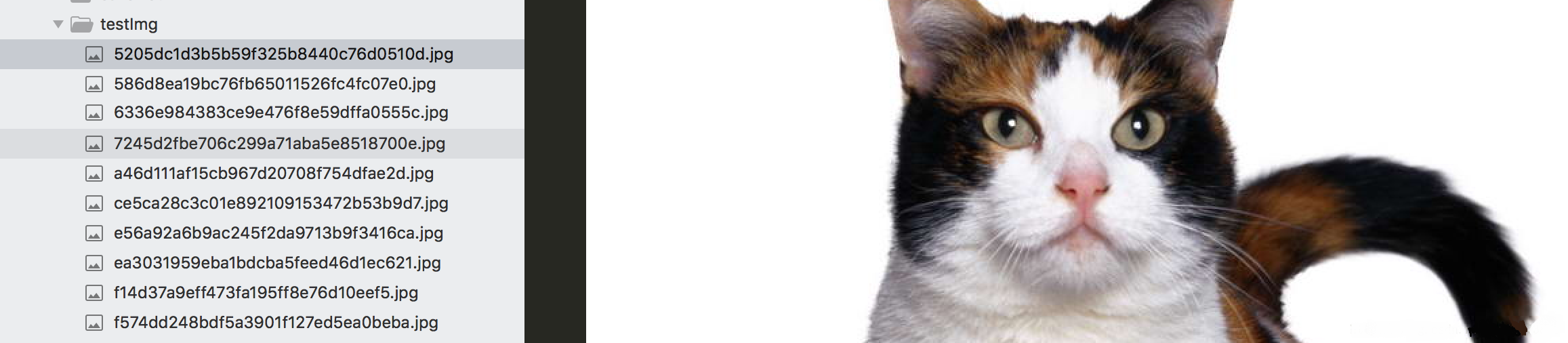
执行结果:
因为从testimg 中选取图片是随机的,所以每次执行的结果不同
从指定的路径中加载模型。。。。
模型加载成功, 训练的步数为 11999
狗的概率 0.964047
[Finished in 6.8s]
代码地址:https://github.com/527515025/My-TensorFlow-tutorials/blob/master/猫狗识别/evaluateCatOrDog.py
欢迎star。
总结
以上就是这篇文章的全部内容了,希望本文的内容对大家的学习或者工作具有一定的参考学习价值,谢谢大家对【听图阁-专注于Python设计】的支持。如果你想了解更多相关内容请查看下面相关链接