深入解析Python设计模式编程中建造者模式的使用
建造者模式:将一个复杂对象的构建与他的表示分离,使得同样的构建过程可以创建不同的表示。
基本思想
某类产品的构建由很多复杂组件组成;
这些组件中的某些细节不同,构建出的产品表象会略有不同;
通过一个指挥者按照产品的创建步骤来一步步执行产品的创建;
当需要创建不同的产品时,只需要派生一个具体的建造者,重写相应的组件构建方法即可。
代码结构
class Builder(object):
  """基类"""
  def Part1(self):
    # 不同类型的产品,该步骤的细节可能不同
    raise NotImplementedError()

  def Part2(self):
    # 不同类型的产品,该步骤的细节可能不同
    raise NotImplementedError()

class Builder1(Builder):
  """派生类,生产builder1类型的产品"""
  def Part1(self):
    print 'builder1 Part1'

  def Part2(self):
    print 'builder1 Part2'

class Builder2(Builder):
  """派生类,生产builder2类型的产品"""
  def Part1(self):
    print 'builder2 Part1'

  def Part2(self):
    print 'builder2 Part2'

class Director(object):
  """指挥者,负责组织产品的构建过程"""
  def Build(self, builder):
    builder.Part1()
    builder.Part2()

def client():
  director = Director()
  director.Build(Builder1())
  director.Build(Builder2())
这里有一个疑问,指挥者这个角色有什么用呢。感觉除了增加client的调用负担外,似乎没什么用处。为什么不把产品构建过程放在Builder基类中呢,像下面这样:
class Builder(object):
  """基类"""
  def Part1(self):
    raise NotImplementedError()

  def Part2(self):
    raise NotImplementedError()

  def Build(self):
    self.Part1()
    self.Part2()

class Builder1(Builder):
  def Part1(self):
    print 'builder1 Part1'

  def Part2(self):
    print 'builder1 Part2'

class Builder2(Builder):
  def Part1(self):
    print 'builder2 Part1'

  def Part2(self):
    print 'builder2 Part2'

def client():
  Builder1().Build()
  Builder2().Build()
没错,上面就是典型的模板方法模式的实现套路,回顾一下模板方法模式的定义: > 模板方法模式:定义一个工作流或算法的基本骨架,而将一些特定步骤的实现延迟到子类中。
模板方法模式更多的关注于算法流程,而建造者模式更多的关注于复杂对象的创建,模板模式应用场景比建造者模式更多一些,写起来也更自然一些。
类图
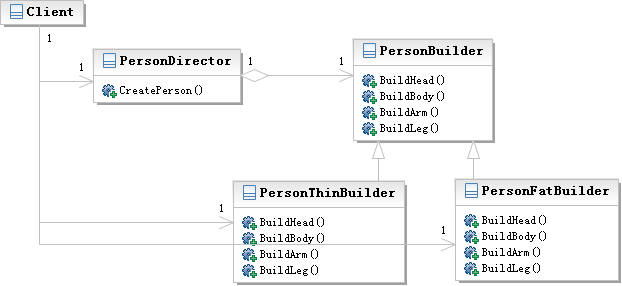
实例
#encoding=utf-8
#
#by panda
#建造者模式


def printInfo(info):
  print unicode(info, 'utf-8').encode('gbk')

#建造者基类
class PersonBuilder():
  def BuildHead(self):
    pass

  def BuildBody(self):
    pass

  def BuildArm(self):
    pass

  def BuildLeg(self):
    pass

#胖子
class PersonFatBuilder(PersonBuilder):
  type = '胖子'
  def BuildHead(self):
    printInfo("构建%s的头" % self.type)

  def BuildBody(self):
    printInfo("构建%s的身体" % self.type)

  def BuildArm(self):
    printInfo("构建%s的手" % self.type)

  def BuildLeg(self):
    printInfo("构建%s的脚" % self.type)


#瘦子
class PersonThinBuilder(PersonBuilder):
  type = '瘦子'
  def BuildHead(self):
    printInfo("构建%s的头" % self.type)

  def BuildBody(self):
    printInfo("构建%s的身体" % self.type)

  def BuildArm(self):
    printInfo("构建%s的手" % self.type)

  def BuildLeg(self):
    printInfo("构建%s的脚" % self.type)

#指挥者
class PersonDirector():
  pb = None;
  def __init__(self, pb):
    self.pb = pb

  def CreatePereson(self):
    self.pb.BuildHead()
    self.pb.BuildBody()
    self.pb.BuildArm()
    self.pb.BuildLeg()

def clientUI():
  pb = PersonThinBuilder()
  pd = PersonDirector(pb)
  pd.CreatePereson()

  pb = PersonFatBuilder()
  pd = PersonDirector(pb)
  pd.CreatePereson()
  return


if __name__ == '__main__':
  clientUI();