python清理子进程机制剖析
起步
在我的印象中,python的机制会自动清理已经完成任务的子进程的。通过网友的提问,还真看到了僵尸进程。
import multiprocessing as mp
import os
import time
def pro():
 print ("os.pid is ", os.getpid())
if __name__ == '__main__':
 print ("parent ", os.getpid())
 while True:
  p = mp.Process(target = pro)
  p.start()
  time.sleep(1)
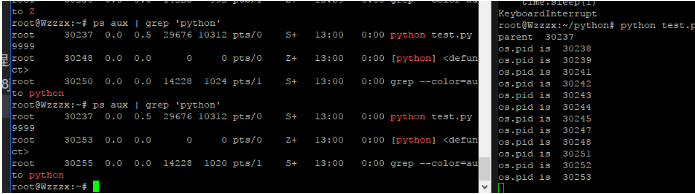
于是我觉得我要重新了解一下这个过程。
销毁僵尸进程的时机
mutilprossing.Process 继承自 BaseProcess 文件在 Lib/mutilprossing/process.py 中,我们看看它的start方法:
_children = set()
class BaseProcess(object):
 def start(self):
  self._check_closed()
  _cleanup()
  self._popen = self._Popen(self)
  self._sentinel = self._popen.sentinel
  # Avoid a refcycle if the target function holds an indirect
  # reference to the process object (see bpo-30775)
  del self._target, self._args, self._kwargs
  _children.add(self)
_children 是一个全局的集合变量,保存着所有 BaseProcess 实例, start 函数末尾处 _children.add(self) 将进程对象放入。又注意到 _cleanup() 函数:
def _cleanup():
 # check for processes which have finished
 for p in list(_children):
  if p._popen.poll() is not None:
   _children.discard(p)
_popen 是一个 Popen 对象,代码在 multiprossing/popen_fork.py 中,其 poll 函数有个 id, sts = os.waitpid(self.pid, flag) 一个回收子进程的函数。回收后再将 BaseProcess 子类实例从_children中移除。
这下就清楚了,python在子进程start中将进程放入集合,子进程可能长时间运行,因此这个集合上的进程会有很多状态,而为了防止过多僵尸进程导致资源占用,python会在下一个子进程 start 时清理僵尸进程。所以,最后一个子进程在自身程序运行完毕后就变成僵尸进程,它在等待下一个子进程start时被清理。所以 ps 上总有一个僵尸进程,但这个僵尸进程的 进程id 一直在变化。