python编程测试电脑开启最大线程数实例代码
本文实例代码主要实现python编程测试电脑开启最大线程数,具体实现代码如下。
#!/usr/bin/env python
#coding=gbk

import threading
import time, random, sys

class Counter:
  def __init__(self):
    self.lock = threading.Lock()
    self.value = 0

  def increment(self):
    self.lock.acquire()
    self.value = value = self.value + 1
    self.lock.release()
    return value

counter = Counter()
cond = threading.Condition()

class Worker(threading.Thread):

  def run(self):
    print self.getName(), "-- created."
    cond.acquire()
    #for i in range(10):
      # pretend we're doing something that takes 10?00 ms
      #value = counter.increment()
      # time.sleep(random.randint(10, 100) / 1000.0)
    cond.wait()
    #print self.getName(), "-- task", "finished"
    cond.release()


if __name__ == '__main__':

    try:
      for i in range(3500):
        Worker().start() # start a worker
    except BaseException, e:
      print "异常: ", type(e), e
      time.sleep(5)
      print "maxium i=", i
    finally:
      cond.acquire()
      cond.notifyAll()
      cond.release()
      time.sleep(3)
      print threading.currentThread().getName(), " quit"
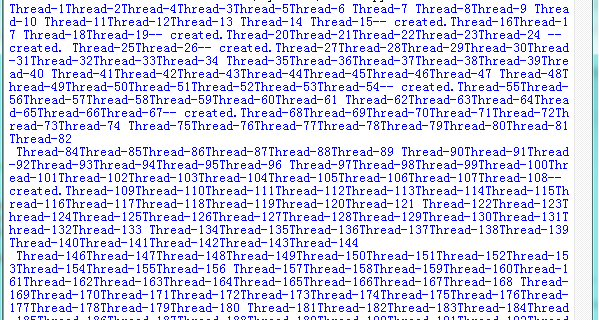
运行结果部分截图:
总结
以上就是本文关于python编程测试电脑开启最大线程数实例代码的全部内容,希望对大家有所帮助。感兴趣的朋友可以继续参阅本站其他相关专题,如有不足之处,欢迎留言指出。感谢朋友们对本站的支持!